bookmark_borderDespite Partial Paralysis, Iconic Karen Healey Designs and Judges Open Eq Challenge at Sonoma

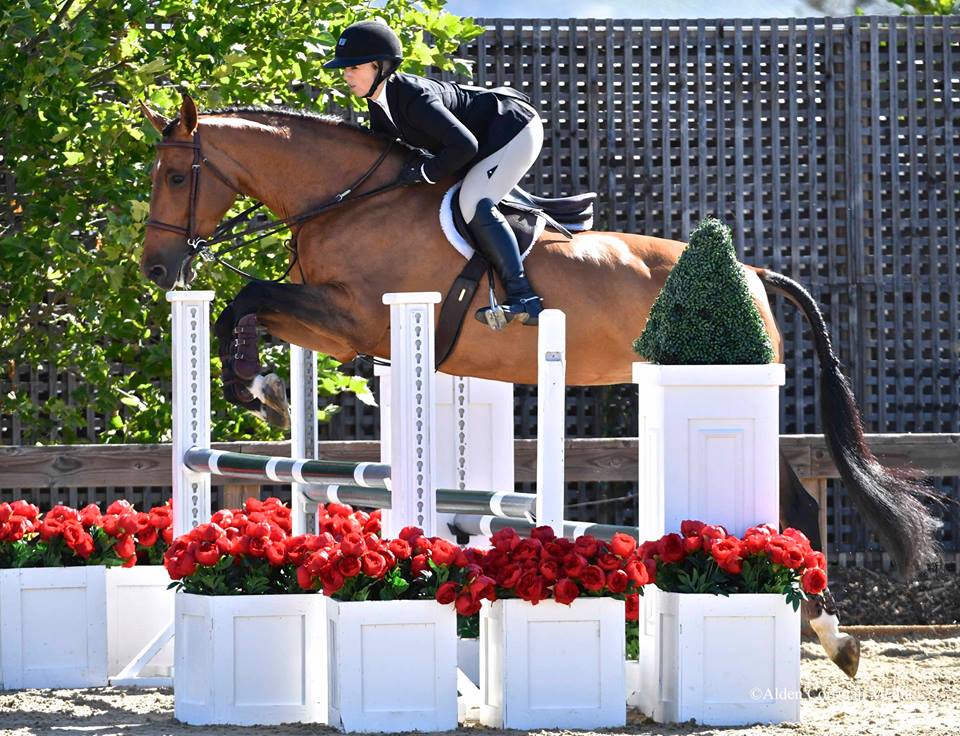
Kylee Arbuckle, winner of the Karen Healey Open Equitation Challenge. PC: Alden Corrigan Media


By Jumpernation.com

Karen Healey is one of the most recognizable and iconic trainers and judges in the United States – starting out at Hunterdon learning under George Morris in the early 1970s and going on to build her own business on the west coast, where she developed riders like Mia Wood, Lauren Kay and Meredith Michaels-Beerbaum. As a USEF R-rated judge, she’s pinned some of the biggest shows in the world, including Devon, the Hampton Classic, Pony Finals and more.
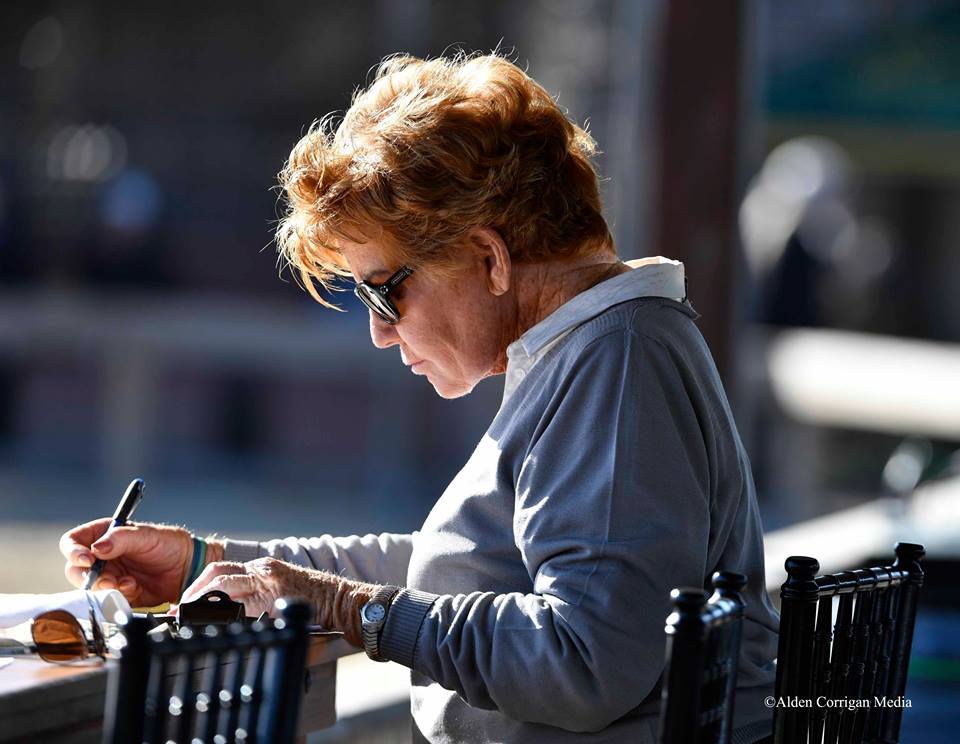
Karen Healey at Judges Table in Sonoma. PC: Alden Corrigan Media.

This past Saturday at Sonoma Horse Park, organizers decided to honor the legendary Karen Healey, and in true Karen form, she insisted the occasion was an opportunity to for riders to grow, learn, and compete by designing the course and judging the Open Equitation Challenge herself.

No small feat considering what she has been through recently: Karen underwent a back surgery in early December which had significant complications, and because of blockages in her spinal column, left one of her legs partially paralyzed.

She’s had additional surgery and extensive physical therapy and continues to fight a battle for mobility, but she has remained absolutely unwavering in her commitment to the sport. The Open Eq at Sonoma was a great opportunity for her to get back out there with the community she loves.

“First of all it was very emotional for me to do this class because (Sonoma Facility Manager) Ashley Herman has done so much to try to help me when my leg was paralyzed,” Said Karen. “She has really been trying to help and it was a huge honor for me.”

Karen used a modified version of the course she used at the USET Finals last year to fit the Sonoma ring, and was really pleased with the challenge it laid out for the riders and the ultimate result.

“For the most part they rode pretty well, the top ones were very, very good. It was tough but it was supposed to be a champions class and I kept it 3′ 3″. I don’t think anything was impossible, but it tested them. It asked them to go forward, it asked them to come back, jump off a turn, to be able to hold out and do the correct bend; so everything I teach was in the course.”

The class winners of this singular occasion were Kylee Arbuckle and Cocon 4, who happened to be making their inaugural outing at this level of competition.

“The mare I rode was actually Ned Glynn’s jumper that we are now going to turn into an equitation horse,” Kylee said. “It was her first time ever doing equitation or jumping flowers, so it was really fun. Ned let me ride her we wanted to see what she was going to be like and she was awesome! We knew she was going to be brave, and so it was just fun for me to go out and do that.”

Kylee also shared that it was a really emotional and important win to succeed in a class honoring Karen, with whom she has a history from her junior years. “It is really special to me, since I rode with Karen when I was a junior. Karen Healey is an amazing horse woman and she has always been an inspiration to me.”

Addyson Cord and Zidane took a close second place in the course with a smooth and calculated ride, followed by Alexa Leong aboard Cintas in third place, who also put in a top notch round together.

Full Results:

Kylee Arbuckle and Cocon 4
Addyson Cord and Zidane
Alexa Leong and Cintas
Anna Lisa Ericson and Bullwinkle
Ransome Rombauer and Gaston
Sophia Silveiera and Arezzo
Audrey Poole and Rivercross Nobility
Sabrina Jain and Kocu

In an effort to help Karen cover the considerable costs of her recovery, the California Professional Horsemen’s Association Foundation has established a fund to accept tax-deductible donations on her behalf, and members of the hunter/jumper world have responded generously with much-appreciated donations. For information on contributing to this fund, contact Ruth Frazier at [email protected] or visit cpha.org.

View original article here.
bookmark_borderCandid With Karen: Not Your Enemy! May 2017

by Karen Healey | From Riding Magazine May 2017 Issue

A judge’s perspective on the most under-appreciated job at the horse show.

Before I talk about what I like or don’t like when I judge hunters, I want to talk a little about what the job entails. I personally think that every trainer should have their judge’s cards – it makes you a way better exhibitor!

There are several things that exhibitors should know about the most under-appreciated job at the horse show. First, we sit for sometimes 12 hours, but usually a minimum of eight, and try our best to put horses in the correct order. The judge is not your enemy. I promise you that no one is more upset when a winning round is marred at the end by a cheap rail or a cross-canter. We are rooting and sometimes praying for a great round. There will be classes when your cut-off score is an 87 and other classes when your cut-off score is a 78.

Secondly, the judge can only score what he can see. Particularly when you judge by yourself, at some point you have to look down and mark your card. If a horse spooks a little or steps off his lead at that instant – you got lucky. If a horse picks up the wrong lead in an under-saddle class in a corner of the ring that the judge is not watching – again, it’s your lucky day.

If you are sitting directly behind a jump you may not be able see if a horse hangs a leg. Years ago at a major indoor horse show, the first jump was a Riviera gate dead away from the judges. A very good horse ridden by a very good rider hung both legs straight down. There was a collective gasp from the exhibitors’ side, but the judges saw nothing that indicated a bad jump and the horse ended up being the winner.

Remember, the judge is not sitting at the in-gate and jumps can look different depending on where you’re sitting. In classes that have two or more judges sitting at different positions around the ring be prepared to have very different scores.

Quality Jump

There has been quite a bit of talk recently that judges are partially to blame for the use of calming and relaxing drugs. The thinking seems to be that if the judges would penalize the “slow” horses it would help to deter people from using these medications.

Let’s get one thing straight – I can’t think of a single top judge who doesn’t appreciate a great jumping horse that’s ridden with pace. Think Brunello and Liza Towell. But we have to judge what’s in front of us. In that class there is no way that a horse that is ridden with pace but jumps poorly is going to beat one that is high and slow off the ground. Judging is a matter of comparison – is that horse better or worse than the one before it?

That being said, it’s a good start on what I’m looking for in a hunter round. First and foremost for me is the quality of the horse’s jump. I love pace, but out of pace the horse should get to the jump and rock back on his hocks and jump up in a beautiful bascule with his shoulders up and a descent of the head and neck. I will forgive a lead swap off the ground or even a light rub if the horse jumps with these qualities.

A great expression – the horse’s ears up looking through the bridle to the next jump – is a great plus. They should look happy to be doing their job. Along with that is a round that does not look manufactured every step of the way. I don’t want to see a dressage clinic on the ends of the ring. I don’t like martingales that are so tight they look like you could play a tune on them. On the other hand, some martingales are so long they are distracting to the round. I go back to learning from George Morris: if you notice something, it’s probably wrong.

In a nutshell, my ideal round is a beautiful horse, impeccably turned out, walks into the ring, picks up a gallop and gets to the first jump, explodes off the ground and proceeds to jump every jump the same way. Can I tell you how seldom that happens?

Again, the judge’s job is to score the first round against that ideal and then place each horse above or below. Most of the time, even at top shows, we rarely see that ideal round, particularly when judging some of the 3’ and below classes. But every class has to have a winner and I know that every person I’ve had the privilege of judging with is trying their best to come up with the right one.


Karen Healey has given a lifetime of expertise and volunteer work to the hunter/jumper industry. Complications from a recent back surgery have left her in and out of the hospital and a physical rehab center. In an effort to help Karen cover those considerable costs, the California Professional Horsemen’s Association Foundation has established a fund to accept tax-deductible donations on her behalf, and members of the hunter/jumper world have responded generously with much-appreciated donations. For information on contributing to this fund, contact Ruth Frazier at [email protected] or visit cpha.org.

Original article posted here.

bookmark_borderCandid With Karen: Who Knows? March 2017

by Karen Healey | From Riding Magazine March 2017 Issue

Will the Federation’s stiffer drug penalties curtain the cheaters?

“Who knows?”

That’s my answer to the question a lot of people have been asking about whether the United States Equestrian Federation’s aggressive stance on medication abuses will make a difference.

As most everybody knows, two prominent and very successful East Coast trainers received $24,000 and $12,000 fines in January, and were suspended from USEF competition for two years and one year, respectively. They were busted for using “GABA,” a calming agent that is on the Federation’s list of forbidden substances, on a top horse competing in Kentucky last summer.

The size and severity of the fines were definitely done to make a statement. The Federation issued news of the suspension on Jan. 11, in the middle of their annual meeting, and I must say it was the first time ever in my life that I have received an email about that kind of news. I’m not so sure that part of it was correct. It should have been published in Equestrian Magazine, where hearing committee decisions are normally published. The way they did that was really to make an example out of them.

As to whether it will help reduce the amount of medication abuses, I really don’t know. The cheaters are always two steps ahead and there are always people who will do anything and everything to try to get an edge over other competitors. You know, the trainer who did it is a good enough horseman to win without cheating. It’s just that this is the way he’s always done it.

I did like the advance notice the Federation put out regarding GABA, which is found in the product Carolina Gold. Some time ago, the Federation made it known that they were testing for it and that abusers would get nailed. At least that helps some from a deterrent standpoint.

There were some interesting discussions about other methods of curbing drug abuse during the USHJA Annual Meeting. Trying to reduce the incentives for cheating was one idea. The USHJA’s new task force on this issue will first look at what the incentives for cheating are – beyond the obvious desire to win.

Some have asked if changing judging standards might help, but I think that would be totally wrong. Nobody who is a good judge will penalize a horse that jumps a phenomenal jump, lands and plays a little bit on the landing side. If a horse looks a little in the corner, you do have to make note of it, but, as a judge, I’m not going to kill the round for it.

I think that any horseman capable of seeing what’s good in a horse’s round would say the same. Unfortunately, there are many people with a judge’s card who can only see what’s wrong, not what’s right. Either way, I don’t think that changing the standards we are looking for in a beautiful hunter will help. There’s this idea that a horse can’t take a breath out there on course and win, and I don’t think that’s true. A horse is certainly allowed to have a pulse!

Owner Awareness

There was also a lot of talk about horse owners having little idea what medications their horse is getting and I think that is a widespread reality. Owners have a voice, for sure, both with their trainers and within the industry. I think if the owners had any idea their horses were getting illegal medications, I think 98% would say no to it, so that would help.

I’ve seen owners take extreme positions and that can backfire. I’m talking about legal medications here: NSAIDs like bute and banamine, for example. I had a customer years ago who said, “I don’t want my horse to have anything.” And I said, “Fine,” but explained to them that you are going to be at a disadvantage because every horse in the ring is getting something. I’ve seen horses whose owners have taken the no medications stance and, at the end of the day, you see that horse and my feeling is, “I think he really would like a gram of bute!”

Small NSAID doses are done for the horse’s sake: to keep him comfortable and alleviate inflammation at the end of the day. It’s no different than people taking Tylenol at the end of the day. It’s an analgesic that helps the horse feel better, but in too small a dose to mask an injury.

My thinking on some parts of this discussion have changed. Over the years, there’s been a lot of talk about legalizing small doses of the tranquilizer, acepromazine. At one point many years ago, I was all for that. I believed that a quarter CC of “ace” was better than “LTD,” “lunge ‘til dead,” on the basis that it’s kinder to the horse. But, I’ve since grown to believe that that levels the sport’s playing field in a bad way. It allows non-trainers and non-horsemen to be on the same level as those of us who learned to train horses without that. There are people who could never do that. By using illegal meds, someone who’s not a very good trainer can win and move up in the sport.

I don’t know if anything is going to curb abuse by certain professionals. I think there are certain people who are arrogant and think they are above the law or that it doesn’t apply to them. I am fully in favor of anything and everything that makes the sport more transparent and if these stiffer fines and public “shaming” serve that end, then I’m behind them.

Original article posted here.

bookmark_borderRombauer Wins the 2015 Platinum Performance/USEF Show Jumping Talent Search Finals – West

San Juan Capistrano, Calif. – After four challenging Phases of competition, Ransome Rombauer found herself in the ride-off on Saturday against three strong competitors in the 2015 Platinum Performance/USEF Show Jumping Talent Search Finals – West. She edged out Savannah Jenkins by one point to win this year’s championship with a score of 351 to Jenkins’s 350. Eve Jobs finished in third place with a score of 331. Rounding out the ride-off was Mitchell Endicott who finished with 326.

“It feels great to win the championship. I competed in the finals last year with the same horse and won the flat, but missed an inside turn in the gymnastics phase so I didn’t get a score. I was just under a lot of pressure. I love the new format because a lot of different riders can do it, and it helps riders move up the levels,” said Rombauer.

The competition began on Friday with Phase I where judges Alex Jayne and Debbie Stephens put the riders through a nine-movement individual test on the flat. Jenkins (Virginia Beach, Va.) and Cristobal Collado’s Vandor took the lead early with a score of 76. Megan Hilton (Seattle, Wash.) and her own Cantoblanco were close behind with a 74.5 and Miela Gross (Del Mar, Calif.) and her own Zoe finished in third place with a score of 72. Rombaurer (Saint Helena, Calif.) and Alexis Graves’s Lalonde ended the flat phase in fourth place with a score of 71.5.

Following the flat phase, the riders moved on to the Phase II, where they tackled a gymnastics course including a trot fence, bounce, and several combinations. Jenkins maintained her lead after scoring an 84 in the gymnastics phase for a total score of 202. Jobs (Palo Alto, Calif.) and her own Esprit 373 had a great gymnastics test for a score of 87, which moved her to second place overall with a score of 196.5. Rombaurer tied with Hilton for third place overall with a score of 194.5. The top score in the gymnastics phase went to Michael Williamson (Loomis, Calif.), who put in a brilliant performance for a score of 90 moving him into sixth place at the end of Phase II.

Competition concluded on Saturday with the Phases III and IV. Rombauer edged Jenkins out for the lead in Phase III with the top score of 90 over the 13-element jumper course. Her clean round through the course moved her to first place overall with a score of 374.5 while Jenkins scored an 86 for a total score 374.0, narrowly moving her to second place. Jobs finished Phase III with a three-round total of 364.5 after scoring an 84 in the jumping phase and Endicott (Rancho Santa Fe, Calif.) earned a jumping score of 83 for an overall score of 357.5.

“The jumping course was long and challenging, but I nailed it. I wasn’t that nervous. There wasn’t time to get anxious,” added Rombauer.

The top four finishers at the end of Phase III, Rombauer, Jenkins, Jobs, and Endicott returned to the Grand Prix field to compete in Phase IV. Each rider jumped a shortened course on their own horse before completing the course on each of the other three horses.  After the first three rounds of the ride-off, Rombauer and Jenkins were tied with cumulative scores of 265. In the final round, Rombauer narrowly secured the victory with an effective ride on Endicott’s El Paso to give her a one-point lead over Jenkins.

“I was super pleased with the results. The courses were fair. The flat test was great, and the top group stayed the same through the entire competition, which doesn’t always happen. With the flat test, we got to see the strength and weakness of each rider. I was pleased with the gymnastics course as it prepared the horse and rider for the final day. It came down to the wire with the finalists, and the horses jumped great. It was just a super group of riders,” said judge Jayne.

Rombauer was awarded the Denali Trophy, donated by Maya Hamburger, in addition to a Der Dau certificate provided by Blenheim EquiSport and a new iPad given by Platinum Performance. Karen Healey and Daniel Ighani, who trained Rombauer, were awarded the Leading Trainer Award. The Gulliver Trophy, donated by Karen Healey, was awarded to Alexis Graves’s Lalonde, ridden by Rombauer, who the judges chose as the best horse of the competition.

Reprinted from USEF Network.

bookmark_borderRansome Rombauer Reserve Champion at 2015 CPHA Foundation Finals

“…As often happens in challenging, high-pressure competition, the leader board changed a bit after Round 2. The best rides were executed by Gross, with a 90, and Rombauer with an 88. They entered the work-off with only 1.25 points separating their averages of 89 and 87.75. Eight more riders earned a spot in the top ten work-off, with scores averaging at 80 or above.

The work-off required a demonstration of two figure eights around specific markers, one at the sitting trot and one at the counter-canter with a flying change, followed by a hand gallop to fence 7. Requiring skill and balance from both horse and rider, five of the ten returning competitors scored 80 or above.

Suspenseful until the final announcements, the work-off scores were announced at the same time as the top ten ribbon winners, in reverse order. Sydney Hutchins, who rides with Elvenstar, jumped from seventh to third with her work-off score of 90 and final total of 170.75. Gross and Rombauer held their top two spots, with work-off scores of 86 and 85, finishing with final totals of 175 and 172.75.”

To read full press release click here.

CPHA Foundation Equitation Championship Final, 21 & Under
Place – Entry – Name – Trainer
1. 382 – Miela Gross – Emily Esau Williams
2. 248 – Ransome Rombauer – Daniel Ighani and Karen Healey Stables
3. 788 – Sydney Hutchins – Elvenstar
4. 760 – Emily Maclean – Devon Gibson and Karen Healey Stables
5. 178 – Mitchell Endicott – Pegasus Show Stable
6. 448 – Nina Vogel – Far West Farms
7. 443 – Cayley Boyd – Far West Farms
8. 719 – Peyton Warren – Jill Humphrey
9. 484 – Gracie Marlowe – Leslie Steele
10. 331 – Jacqueline Vail – Kelly Van Vleck

bookmark_borderKHS Students Finish 1st and 7th in CPHA Junior Medal Finals 2015

“San Juan Capistrano, CA – Medal Finals season kicked off this week at the Blenheim Summer Classic with the California Professional Horsemen’s Association (CPHA) Junior and Amateur Hunt Seat Medal Finals. Judged by John Roper, Tony Sgarlata, and Scott Hofstetter, the three round competition ended with flair in the indoor ring adjacent to the Rancho Mission Viejo Riding Park at San Juan Capistrano.

e3a26351-3946-4809-9819-07c90c844576

After two rounds, one on Friday and the second on Saturday afternoon, the top ten-scoring Juniors and Amateurs returned to compete for the top prize on Saturday evening. Jayme Omand of Sacramento aboard Pumpkin Ridge Equestrian Center’s Zilveren earned the top call in the Amateur Division and Grady Lyman of Rancho Santa Fe, riding Christy Clarkson’s Sinatra’s Ruhm, brought home the blue in the Juniors…”

Click here to read full press release from Blenheim Equisports.

Results:

CPHA Junior Hunt Seat Medal Final
Place – Entry – Name – Trainer – Final Score
1 – 551 – Grady Lyman – Bridgeport Farms and Karen Healey Stables – 771.00
2 – 377 – Nina Vogel – Far West Farms – 750.00
3 – 584 – Kayla Lott – Elvenstar – 746.25
4 – 218 – Emma Marlowe – Leslie Steele – 717.50
5 – 220 – Haley Giddings – Richard Slocum – 676.25
6 – 509 – Madison Myro – Judy Nielson – 654.50
7 – 160 – Morgan Dickerson – Karen Healey Stables – 647.00
8 – 456 – Mimi Kelly – Matthew Sereni – 641.00
9 – 321 – Natalie Templeton – Robyn Stiegler – 569.50
10 – 244 – Michael Williamson – Patty Ball – 476.50

bookmark_borderA History of Success: George Morris and Karen Healey Stables Team up for 2014 California Clinic

November 22, 2014 | By Jackie McFarland

Karen Healey Stables is pleased to host their annual 2014 George H. Morris Clinic at Whitethorne Ranch in Somis, CA December 12-14, 2014. Morris has made this December clinic a must on his list for well over almost two decades.   Drawing participants and auditors from near and far, the legendary horseman’s knowledge is known to make an impact.

1970s Karen and George

Karen Healey and George Morris share a long history. Also well-respected for her teaching, Healey began her professional career working for Morris at Hunterdon from 1971 – 1974. During her time there, Healey immersed herself in the training techniques and methods that Morris utilizes to this day. Not only did she learn to apply his straightforward and comprehensive style to her future teaching career, but also the importance of being a well-rounded horseman outside of the show arena.

Karen Healey and George Morris

Located on the idyllic Whitethorne Ranch facility in Somis, CA Healey and her team offer an advanced training program for juniors and amateurs looking to excel in the equitation, jumper, and hunter rings.   A West Coast pioneer, Healey has developed champions since the 1980’s and her riders continue to excel to this day.

Whitethorne Ranch

Whitethorne Ranch
Held in December of each year, the clinic pulls in a host of equestrians for three days of intense learning and listening, as Morris teaches three sessions each day: Jumpers, Advanced Riding, and Equitation 3’6”.  To experience the celebrated trainer at work honing in on the finer points of his American Forward Riding System and essential horsemanship, see below.


Historically a sold out event, rider spots are limited so pay your deposit today.


CLINIC FEES:  $900 for the 3-days.  $300 non-refundable deposit due ASAP – no spots will be saved without a deposit.  Payment in full due, please contact Melissa.

AUDIT FEES:   $200 for all sessions, 3 days, paid in advance. Day option: $90. Per session option: $50.  Group rates are available, contact Melissa.

Breakfast and lunch will be served each day. 

Checks should be made to Karen Healey Stables and sent to: 
5501 Balcom Canyon Road, Somis, CA, 93066.

For more information please contact Melissa Jones at [email protected].

And here’s the More Info flyer/clinic link:

http://karenhealeystables.com/karen-healey-stables-hosts-george-morris-clinic-2014/

Whitethorne Ranch

Reposted from Proequest.

bookmark_borderKaren Healey Stables Students First, Third, Eighth, and Ninth in CPHA Junior/Amateur Medal Finals

CPHA Medal Finals Crown Jorgensen and King

San Juan Capistrano, CA – Kicking off the medal finals season, Blenheim EquiSports hosted the California Professional Horsemen’s Association (CPHA) Junior and Adult Finals at the Blenheim Summer Classic. An impressive crowd gathered at Blenheim Farms’ indoor ring for the Final Round. Three experienced female equestrians made up the judging panel, Stacia Madden, Rita Timpanaro, and Debbie Sands.

After two qualifying rounds, the top ten juniors and top eleven adults came back to contest for the overall top prize in each of their respective final rounds. Abby Jorgensen from Woodside, CA won the Junior section decisively, holding her second round lead. Leina King of Santa Barbara, CA topped the Adult section.

King Crowned on Foot
In the first round for the Adults Mackenzie Drazan took home first place, Leina King was second and Serena Anand awarded third.

Like the Juniors, Round 2 and the Final Top Ten Round were both on Saturday. The adults were on their game in Round 2, scores of 85, 84, and 87, Leina King topped the round, and her total score from Round 1 & 2 of 511 sent her to the Final Round at the top of the leaderboard. Serena Anand held the second-highest Round 1 & 2 total score of 498, while Mackenzie Drazen rounded out the top three with a Round 1 & 2 total score of 497.

The final round for the Adults was similar to the Juniors, including a serpentine bending line to two sharp rollbacks at the end of the arena.

Coming back on top, King maintained her cool and earned consistent scores of 80, 82, and 81 across the board, propelling her grand total to 754 and the overall championship. Serena Anand earned a grand total of 742 and was awarded the reserve championship, while Mackenzie Drazan had a grand total of 723 and rounded out the final placings in third.

King was elated at her top placing; however her horse was even more thrilled. King’s mount was so excited in the awards presentation that she lead him out of the ring and did her victory gallop on her own two feet to whoops and applause.

Leina King CPHA Am

Heading into her sophomore year at SMU, King sees riding in a new light. “It’s funny now that I’m an amateur, there’s so much less stress because I feel like I have so much more time,” the Karen Healey student said. “I’ve done the final quite a few times before so I know what to expect, but I’ve been away at school at haven’t showed much this summer. My horse, Santa, fits really well into Karen’s program and is just perfect.”

CPHA Junior Medal Finals
Place – Show # – Name – Trainer – Final Score
1. 181 – Abby Jorgenson – Waldenbrook Farm – 775.00
2. 349 – Halie Robinson – Jim Hagman – 731.75
3. 384 – Nina Vogel – Kost Karazissis – 713.00
4. 103 – Tylor Nowell – Nina Alario – 701.25
5. 150 – Melanie Selleck – Archie Cox – 699.00
6. 278 – Mckenna Skelton – Kasey Ament – 680.00
7. 394 – Chandler Hopper – Nathalie Marring – 655.50
8. 287 – Ransome Rombauer – Karen Healey Stables – 588.75
9. 581 – Savannah Dukes – Karen Healey Stables – 569.00
10. 430 – Ce Ce Manze – Joe Thorpe – 474.75

CPHA Adult Medal Finals
Place – Show # – Name – Trainer – Final Score
1. 223 – Leina King – Karen Healey Stables – 754.00
2. 617 – Serena Anand – Allison Sherred – 742.00
3. 220 – Mackenzie Drazan – Karen Healey Stables – 723.00
4. 604 – Clara Plestis – Ginny Plancke – 689.00
5. 268 – Natasha Pappas – Leila Ward-Maroney – 665.50
6. 422 – Nori Burby – Amy Self – 647.00
7. 122 – Juliana Ronn – Buddy & Vanessa Brown – 548.00
8. 439 – Kacie Doyle – Hap Hansen – 522.00
9. 631 – Belle Calkin – Joe Thorpe – 519.00
10. 420 – Holly Scapa – Holly Scapa – 492.00


Excerpt from Blenheim Equisports.


bookmark_borderEqu Lifestyle: How The West Has Won

An inspiration to hundreds of equestrians, a pioneer of excellence on the both coasts, strong-willed, stubborn and supremely dedicated, Karen Healey can speak volumes about correct position, technical riding, the idiosyncrasies of getting a great jump, essentially every detail of rider and equine development. But she is also a gourmet cook, adores the theatre and volunteers for the homeless every holiday season. I wanted the story behind the master, how she came to be an equestrian, choices she made that we all experience, career moments, her thoughts on the sport. Behind the serious and tireless teacher is a kid who grew up loving horses, worked for the chance to ride and has a huge heart for canines and equines…

Click to read full article

bookmark_borderMcGrath Grabs Individual Show Jumping Gold

Kilian McGrath and Salerno started the individual show jumping day at the Adequan/FEI North American Junior and Young Rider Championships in fifth in the young rider division. But a day full of felled rails for other competitors bumped the pair up to the gold with a final score of 18.92.

McGrath picked up 1 time penalty in the first round and 2 in the second. Callie Smith, 18, on Upstaire took silver (24.00), and Lydia Ulrich, 18, grabbed bronze on Santos Utopia (27.28).

“I didn’t think [I would win gold],” said McGrath, who was representing Zone 10. “I was just hoping I’d make the top three at the most. I tried to be as consistent as possible, and it worked out, apparently.”

McGrath, who rides with Karen Healey and is based in Westlake Village, Calif., started riding Salerno at the beginning of this year’s HITS Desert Circuit (Calif.). Salerno, a 13-year-old Dutch Warmblood (Indorado—Larena, Nimmerdor) gelding owned by Rolling Oaks Ranch, was imported from Brazil by Laura Kraut.

“He’s one of the most amazing horses I’ve ever ridden,” said McGrath. “He’s really smart, really forgiving and really athletic.”

McGrath did her first grand prix this year aboard Salerno.

“I honestly was shocked when they said I won,” she said of her individual gold medal. “I asked Karen if this was real. I’ve only dreamed of getting a gold medal and never thought it would happen this quickly. I was not as qualified as most riders here, but I have a good horse, and I believe in him.”

Kilian and Salerno

—The last rail down on the last course of the day bumped Smith and Upstaire, an 11-year-old Dutch Warmblood (Gran Corrado—Ralmetaire, Animo) owned by Smithfield Farms LLC, down to silver position. But Smith was still thrilled to finish the competition strongly; she was also part of the gold medal-winning Zone 2 team last night.

“I think NAJYRC is the precursor for any larger event,” said Smith, of Bernardsville, N.J. “We learned so much here, especially as a team event. You don’t get many opportunities to ride as a team. If you want to go to the Olympic level or to compete in Europe, you have to do something like that here first.”

—Ulrich, also part of the gold medal Zone 2 team, made a big move up the leaderboard as well, coming from eighth to third with 4 faults in the first round and 5 in the second round. Santos Utopia is a 13-year-old Dutch Warmblood (Nevado 21—Kitty Utopia, Equador) owned by Beth Congel and Up The Creek Farm.

“The first round today was pretty technical, but it was a really good course,” said Ulrich. “I got see a couple of people go before me, and I made my plan.”

—Mattias Tromp and Vosqinus started the young rider individual show jumping in first place, but 20 faults in the first round and 19 faults in the second round demoted them to seventh. Kaitlin Campbell, third at the start of today, took a tumble off Grand Pleasure in the second round and was eliminated.

Reprinted with permission from The Chronicle of the Horse.