bookmark_borderDespite Partial Paralysis, Iconic Karen Healey Designs and Judges Open Eq Challenge at Sonoma

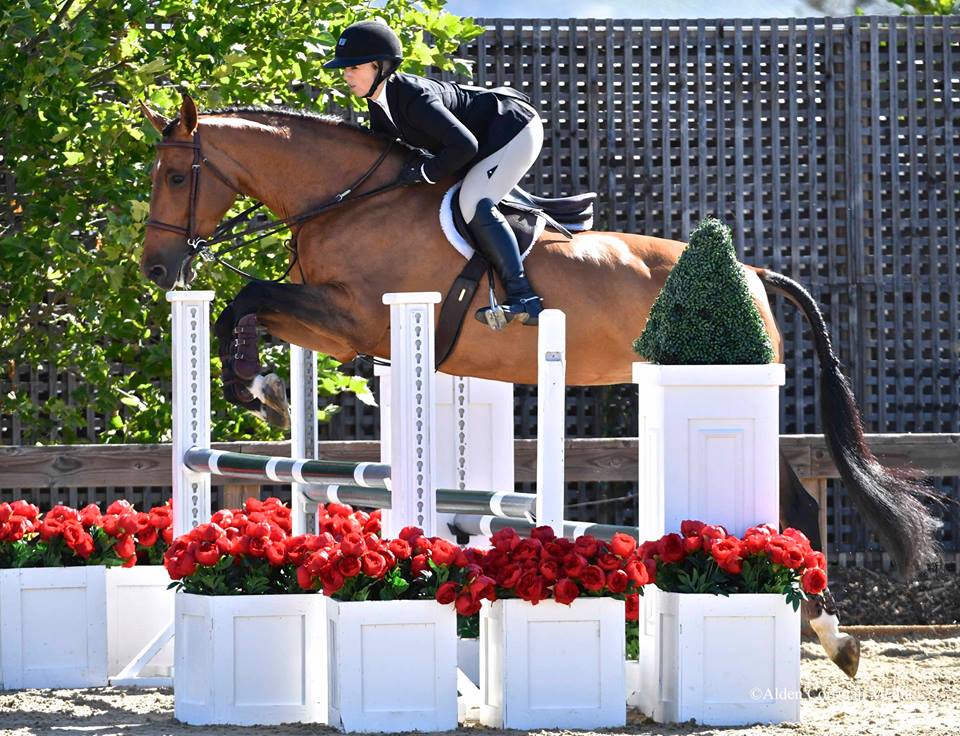
Kylee Arbuckle, winner of the Karen Healey Open Equitation Challenge. PC: Alden Corrigan Media


By Jumpernation.com

Karen Healey is one of the most recognizable and iconic trainers and judges in the United States – starting out at Hunterdon learning under George Morris in the early 1970s and going on to build her own business on the west coast, where she developed riders like Mia Wood, Lauren Kay and Meredith Michaels-Beerbaum. As a USEF R-rated judge, she’s pinned some of the biggest shows in the world, including Devon, the Hampton Classic, Pony Finals and more.

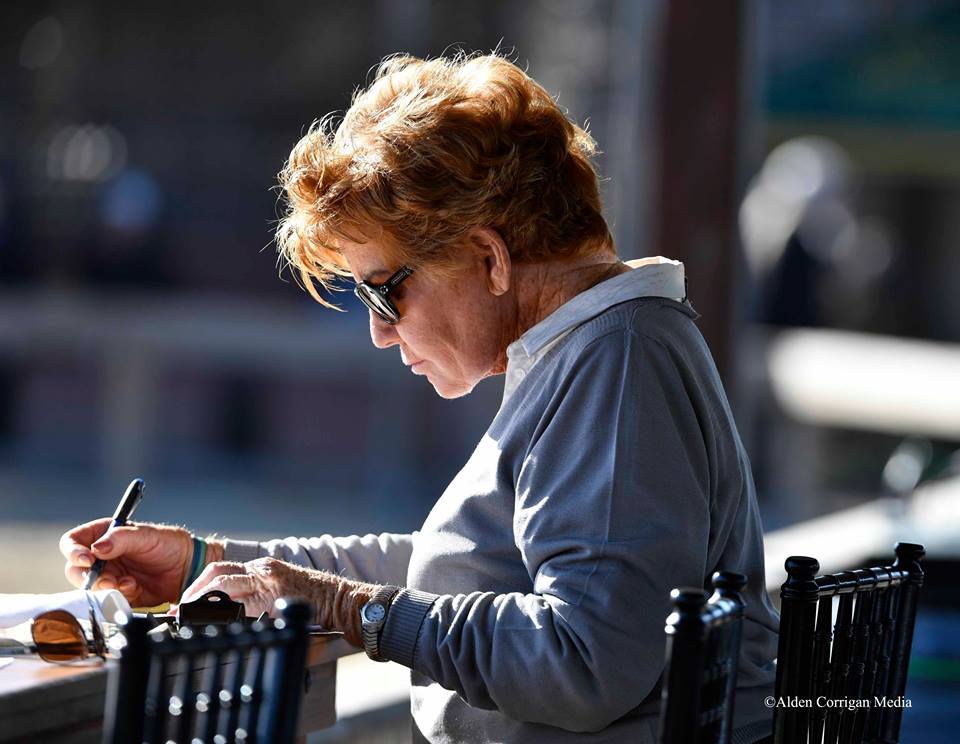
Karen Healey at Judges Table in Sonoma. PC: Alden Corrigan Media.

This past Saturday at Sonoma Horse Park, organizers decided to honor the legendary Karen Healey, and in true Karen form, she insisted the occasion was an opportunity to for riders to grow, learn, and compete by designing the course and judging the Open Equitation Challenge herself.

No small feat considering what she has been through recently: Karen underwent a back surgery in early December which had significant complications, and because of blockages in her spinal column, left one of her legs partially paralyzed.

She’s had additional surgery and extensive physical therapy and continues to fight a battle for mobility, but she has remained absolutely unwavering in her commitment to the sport. The Open Eq at Sonoma was a great opportunity for her to get back out there with the community she loves.

“First of all it was very emotional for me to do this class because (Sonoma Facility Manager) Ashley Herman has done so much to try to help me when my leg was paralyzed,” Said Karen. “She has really been trying to help and it was a huge honor for me.”

Karen used a modified version of the course she used at the USET Finals last year to fit the Sonoma ring, and was really pleased with the challenge it laid out for the riders and the ultimate result.

“For the most part they rode pretty well, the top ones were very, very good. It was tough but it was supposed to be a champions class and I kept it 3′ 3″. I don’t think anything was impossible, but it tested them. It asked them to go forward, it asked them to come back, jump off a turn, to be able to hold out and do the correct bend; so everything I teach was in the course.”

The class winners of this singular occasion were Kylee Arbuckle and Cocon 4, who happened to be making their inaugural outing at this level of competition.

“The mare I rode was actually Ned Glynn’s jumper that we are now going to turn into an equitation horse,” Kylee said. “It was her first time ever doing equitation or jumping flowers, so it was really fun. Ned let me ride her we wanted to see what she was going to be like and she was awesome! We knew she was going to be brave, and so it was just fun for me to go out and do that.”

Kylee also shared that it was a really emotional and important win to succeed in a class honoring Karen, with whom she has a history from her junior years. “It is really special to me, since I rode with Karen when I was a junior. Karen Healey is an amazing horse woman and she has always been an inspiration to me.”

Addyson Cord and Zidane took a close second place in the course with a smooth and calculated ride, followed by Alexa Leong aboard Cintas in third place, who also put in a top notch round together.

Full Results:

Kylee Arbuckle and Cocon 4
Addyson Cord and Zidane
Alexa Leong and Cintas
Anna Lisa Ericson and Bullwinkle
Ransome Rombauer and Gaston
Sophia Silveiera and Arezzo
Audrey Poole and Rivercross Nobility
Sabrina Jain and Kocu

In an effort to help Karen cover the considerable costs of her recovery, the California Professional Horsemen’s Association Foundation has established a fund to accept tax-deductible donations on her behalf, and members of the hunter/jumper world have responded generously with much-appreciated donations. For information on contributing to this fund, contact Ruth Frazier at [email protected] or visit cpha.org.

View original article here.

bookmark_borderCandid With Karen: Not Your Enemy! May 2017

by Karen Healey | From Riding Magazine May 2017 Issue

A judge’s perspective on the most under-appreciated job at the horse show.

Before I talk about what I like or don’t like when I judge hunters, I want to talk a little about what the job entails. I personally think that every trainer should have their judge’s cards – it makes you a way better exhibitor!

There are several things that exhibitors should know about the most under-appreciated job at the horse show. First, we sit for sometimes 12 hours, but usually a minimum of eight, and try our best to put horses in the correct order. The judge is not your enemy. I promise you that no one is more upset when a winning round is marred at the end by a cheap rail or a cross-canter. We are rooting and sometimes praying for a great round. There will be classes when your cut-off score is an 87 and other classes when your cut-off score is a 78.

Secondly, the judge can only score what he can see. Particularly when you judge by yourself, at some point you have to look down and mark your card. If a horse spooks a little or steps off his lead at that instant – you got lucky. If a horse picks up the wrong lead in an under-saddle class in a corner of the ring that the judge is not watching – again, it’s your lucky day.

If you are sitting directly behind a jump you may not be able see if a horse hangs a leg. Years ago at a major indoor horse show, the first jump was a Riviera gate dead away from the judges. A very good horse ridden by a very good rider hung both legs straight down. There was a collective gasp from the exhibitors’ side, but the judges saw nothing that indicated a bad jump and the horse ended up being the winner.

Remember, the judge is not sitting at the in-gate and jumps can look different depending on where you’re sitting. In classes that have two or more judges sitting at different positions around the ring be prepared to have very different scores.

Quality Jump

There has been quite a bit of talk recently that judges are partially to blame for the use of calming and relaxing drugs. The thinking seems to be that if the judges would penalize the “slow” horses it would help to deter people from using these medications.

Let’s get one thing straight – I can’t think of a single top judge who doesn’t appreciate a great jumping horse that’s ridden with pace. Think Brunello and Liza Towell. But we have to judge what’s in front of us. In that class there is no way that a horse that is ridden with pace but jumps poorly is going to beat one that is high and slow off the ground. Judging is a matter of comparison – is that horse better or worse than the one before it?

That being said, it’s a good start on what I’m looking for in a hunter round. First and foremost for me is the quality of the horse’s jump. I love pace, but out of pace the horse should get to the jump and rock back on his hocks and jump up in a beautiful bascule with his shoulders up and a descent of the head and neck. I will forgive a lead swap off the ground or even a light rub if the horse jumps with these qualities.

A great expression – the horse’s ears up looking through the bridle to the next jump – is a great plus. They should look happy to be doing their job. Along with that is a round that does not look manufactured every step of the way. I don’t want to see a dressage clinic on the ends of the ring. I don’t like martingales that are so tight they look like you could play a tune on them. On the other hand, some martingales are so long they are distracting to the round. I go back to learning from George Morris: if you notice something, it’s probably wrong.

In a nutshell, my ideal round is a beautiful horse, impeccably turned out, walks into the ring, picks up a gallop and gets to the first jump, explodes off the ground and proceeds to jump every jump the same way. Can I tell you how seldom that happens?

Again, the judge’s job is to score the first round against that ideal and then place each horse above or below. Most of the time, even at top shows, we rarely see that ideal round, particularly when judging some of the 3’ and below classes. But every class has to have a winner and I know that every person I’ve had the privilege of judging with is trying their best to come up with the right one.


Karen Healey has given a lifetime of expertise and volunteer work to the hunter/jumper industry. Complications from a recent back surgery have left her in and out of the hospital and a physical rehab center. In an effort to help Karen cover those considerable costs, the California Professional Horsemen’s Association Foundation has established a fund to accept tax-deductible donations on her behalf, and members of the hunter/jumper world have responded generously with much-appreciated donations. For information on contributing to this fund, contact Ruth Frazier at [email protected] or visit cpha.org.

Original article posted here.

bookmark_borderCandid With Karen: Who Knows? March 2017

by Karen Healey | From Riding Magazine March 2017 Issue

Will the Federation’s stiffer drug penalties curtain the cheaters?

“Who knows?”

That’s my answer to the question a lot of people have been asking about whether the United States Equestrian Federation’s aggressive stance on medication abuses will make a difference.

As most everybody knows, two prominent and very successful East Coast trainers received $24,000 and $12,000 fines in January, and were suspended from USEF competition for two years and one year, respectively. They were busted for using “GABA,” a calming agent that is on the Federation’s list of forbidden substances, on a top horse competing in Kentucky last summer.

The size and severity of the fines were definitely done to make a statement. The Federation issued news of the suspension on Jan. 11, in the middle of their annual meeting, and I must say it was the first time ever in my life that I have received an email about that kind of news. I’m not so sure that part of it was correct. It should have been published in Equestrian Magazine, where hearing committee decisions are normally published. The way they did that was really to make an example out of them.

As to whether it will help reduce the amount of medication abuses, I really don’t know. The cheaters are always two steps ahead and there are always people who will do anything and everything to try to get an edge over other competitors. You know, the trainer who did it is a good enough horseman to win without cheating. It’s just that this is the way he’s always done it.

I did like the advance notice the Federation put out regarding GABA, which is found in the product Carolina Gold. Some time ago, the Federation made it known that they were testing for it and that abusers would get nailed. At least that helps some from a deterrent standpoint.

There were some interesting discussions about other methods of curbing drug abuse during the USHJA Annual Meeting. Trying to reduce the incentives for cheating was one idea. The USHJA’s new task force on this issue will first look at what the incentives for cheating are – beyond the obvious desire to win.

Some have asked if changing judging standards might help, but I think that would be totally wrong. Nobody who is a good judge will penalize a horse that jumps a phenomenal jump, lands and plays a little bit on the landing side. If a horse looks a little in the corner, you do have to make note of it, but, as a judge, I’m not going to kill the round for it.

I think that any horseman capable of seeing what’s good in a horse’s round would say the same. Unfortunately, there are many people with a judge’s card who can only see what’s wrong, not what’s right. Either way, I don’t think that changing the standards we are looking for in a beautiful hunter will help. There’s this idea that a horse can’t take a breath out there on course and win, and I don’t think that’s true. A horse is certainly allowed to have a pulse!

Owner Awareness

There was also a lot of talk about horse owners having little idea what medications their horse is getting and I think that is a widespread reality. Owners have a voice, for sure, both with their trainers and within the industry. I think if the owners had any idea their horses were getting illegal medications, I think 98% would say no to it, so that would help.

I’ve seen owners take extreme positions and that can backfire. I’m talking about legal medications here: NSAIDs like bute and banamine, for example. I had a customer years ago who said, “I don’t want my horse to have anything.” And I said, “Fine,” but explained to them that you are going to be at a disadvantage because every horse in the ring is getting something. I’ve seen horses whose owners have taken the no medications stance and, at the end of the day, you see that horse and my feeling is, “I think he really would like a gram of bute!”

Small NSAID doses are done for the horse’s sake: to keep him comfortable and alleviate inflammation at the end of the day. It’s no different than people taking Tylenol at the end of the day. It’s an analgesic that helps the horse feel better, but in too small a dose to mask an injury.

My thinking on some parts of this discussion have changed. Over the years, there’s been a lot of talk about legalizing small doses of the tranquilizer, acepromazine. At one point many years ago, I was all for that. I believed that a quarter CC of “ace” was better than “LTD,” “lunge ‘til dead,” on the basis that it’s kinder to the horse. But, I’ve since grown to believe that that levels the sport’s playing field in a bad way. It allows non-trainers and non-horsemen to be on the same level as those of us who learned to train horses without that. There are people who could never do that. By using illegal meds, someone who’s not a very good trainer can win and move up in the sport.

I don’t know if anything is going to curb abuse by certain professionals. I think there are certain people who are arrogant and think they are above the law or that it doesn’t apply to them. I am fully in favor of anything and everything that makes the sport more transparent and if these stiffer fines and public “shaming” serve that end, then I’m behind them.

Original article posted here.

bookmark_borderCandid With Karen: Tomorrow’s Trainers – December 2016

by Karen Healey | From Riding Magazine December 2016 Issue

Evolving Trainer Certification Program aims to help professionals, their clients and the sport.

We’ll be talking a lot about the evolution of the Trainer Certification Program at this month’s USHJA Annual Meeting in Palm Springs. I can’t go into much detail before that, but I can talk about the reasons why the TCP came into being in the first place and why we’re proposing changes to it.

The TCP came about from long-standing worries among veterans like myself that the basics of real, George Morris-style horsemanship are being lost. We sought a way to preserve and promote this long after those of us who’ve been directly influenced by George are gone.

The decline of horsemanship threatens our sport because it’s the foundation for training programs that create rewarding experiences for clients and thus help to sustain and grow the sport. Understanding basic horsemanship is paramount for the horse’s welfare and longevity

I was talking recently to Kelly Farmer (one of the country’s best Hunter riders). One day she was Best Child Rider at the Devon Horse Show and the next day she was working for Don Stewart, standing at the in-gate with a grooming box and a rub rag in hand.

Many of today’s top trainers started as grooms and working students – Andre Dignelli, John Madden and Frank Madden, just to name a few. In my day, “working student” didn’t mean sitting on a trunk, waiting for the groom to tack up someone’s expensive horse that you have the privilege of riding. I went to work for George as a groom, hoping to be discovered. What I did discover was that I loved teaching and had an aptitude for it. However, in the process I mucked stalls, groomed, braided, drove the truck and waited for the vet at midnight to treat a colicky horse. I also had the opportunity to work with some of the top vets in the country and picked their brains endlessly. Riding was just one part of my education.

There are no shortcuts. It is only through years of hands-on involvement that the top trainers of today have achieved their goals.

Having that kind of experience and mileage impacts the horses. It has so much to do with having a feel for their well-being. I can get on a horse that’s not limping, but sense if something’s not right. Maybe the canter going to the left just doesn’t feel right. It enables us to be proactive, recognizing and dealing with issues before they happen.

Weighty Responsibilities

Many young trainers don’t really know or appreciate the responsibility that is attached to the purchase of a horse for a client. Whether it is from Europe or out of the show ring at Devon, you need to be very sure that you can replicate the program that made the horse a winner. It’s very easy for a client to become suspicious after even one expensive mistake.

The TCP encourages and acknowledges trainer education. It already provides a way for prospective clients to see that a pro has completed the education component and to see a resume posted by the trainer. But most new clients won’t recognize in those resumes the difference between winning as a rider and the ability to identify, produce and maintain a winning horse or rider.

Our new proposals create levels of certification, enabling a client to really research a trainer’s credentials. They will make it clear whether a pro has produced riders and horses who have won at various levels. It has always baffled me that people spend more time researching what kind of TV to buy than they do choosing a trainer for their children or themselves. The new TCP proposals are meant to encourage and facilitate more meaningful research.

From the professionals’ perspective, we’re aiming the TCP at the younger professionals who actually want information and want to find ways to get educated. Grandfathering in trainers of a certain vintage and experience is part of the plan. The proposed levels reflect the reality that nobody becomes a premiere trainer all at once. You build on it, from local to regional to national.

All of us on the TCP committee have been working like crazy to present these changes at the USHJA meeting, but I want to emphasize that there is still room to expand and we really want feedback, especially at the local level. We expect people to point out things we may not have thought about.

TCP changes will be part of the Update on Sport Integrity session, Tuesday, Dec. 13 at 2:45 and during that same day’s TCP committee meeting at 4. Hope to see you, and more importantly, hear your feedback then!

Original article posted here.

bookmark_borderCandid With Karen: Get Involved – November 2016

by Karen Healey | From Riding Magazine November Issue

USHJA Annual Meeting in Palm Springs offers opportunity to affect change in the sport.

The annual United States Hunter Jumper Association convention comes to Palm Springs Dec. 11-15 and I look forward to seeing a lot of friends from around the country. I hope, too, that West Coasters will take advantage of the convention’s proximity and continue or begin getting involved in the governance of our sport.

New USHJA president Mary Babick has identified apathy as a major issue and, from my vantage point, I certainly agree that it’s a small group of the same people usually doing the majority of the volunteer committee work that serves all members.

My feeling has always been that if you want to change things, you can’t just stand at the back gate and bitch. There’s a process in place to implement change and if you want change, you need to get involved.

I also know that it can be intimidating as a newcomer to national governance issues. Whenever I’ve been chairman of an open forum at the convention I try very hard to make sure we are not dismissive of anybody or their ideas, but it does happen. If you’ve identified a subject you want to influence, come to the meeting with a thick skin and do your homework.

All of the rule change proposals for this year are available on the USHJA website, www.ushja.org and they have a comment period that extends through Nov. 11. Take a look at the proposals and get up to speed with those that are of the biggest concern to you. Then check the convention schedule and plan to attend the committee session where that topic will be addressed. Even after the formal comment period, the reason we discuss the proposals at the convention is to get more feedback.

Sometimes people come to a convention, speak up in a session and, if the vote doesn’t go the way they wanted, they feel their voice wasn’t heard. That’s usually not the case. You have to understand that most topics have been discussed and debated at least two or three times before they’re put forward as a rule change proposal.

Committee members represent different parts of the country with different concerns for their constituents, and, ideally, that enables discussion of how a proposal might affect all regions and all levels of the sport. But, even though the proposals have already been through a long vetting process before they get to the convention, a lot of times the committee members agree that someone has raised a good, new point and the proposal might get held for further work.

Be Prepared

If you feel strongly one way or another about something, come armed with a lot of good reasons. You can change the mind of a committee. It happens. For example, one of the projects I’m passionate about is the Trainers Certification Program. About five years ago, the committee introduced the concept of certifying trainers at different levels. There was a small but very vocal group of people who derailed that process. I wish we had taken their input and still gone forward with the levels, but it’s an example of how things can change from input at a convention.

The Trainer Certification Program committee, by the way, has a retreat before this year’s convention. We’ll be coming to it with a very important presentation dealing with mandatory certification for trainers and implementation of safe sport practices. This will be part of the USEF Sport Integrity session, on Tuesday, Dec. 13 at 2:45. We urge anybody interested in this topic to attend.

I’ve been attending the national conventions for 30-plus years. I was never intimidated about speaking up! It helped that I established a strong business and earned people’s respect early in my career thanks to some great clients, like Meredith Michaels Beerbaum, and to people respecting my system and work ethic.

I did have to scrape together the funds to attend those first few years. Committee members and everyone else attends on their own dime. Keep in mind you don’t have to attend all five days. Look at the schedule and go on the days when there are sessions of most interest to you. Share a hotel room with a friend to save money and be aware that attendance is a business expense for professionals. (Confirm that with your accountant, of course.)
There’s a social aspect to conventions that makes it fun and adds a networking component that can help your career.

First Steps

For those looking to get involved, I suggest hooking up with the USHJA’s Young Professionals Committee. Also, starting on a local level is a good way to gain experience and credibility for when you want to contribute on a national level. The process of serving on a national committee begins with putting your name on an interest list. When we re-seat a committee, we take into account representation based on geography and various levels of the sport.

If you get on a committee, you have to show up and participate. Often there are a number of people on a committee who don’t even call in for conference calls and put absolutely no effort into it. We recently did a major re-seating of the equitation committee. Some members who were on it for a long time were dropped and very offended and some of the new people we put on did not participate. So, if you want to be part of it, be ready to put in the time, effort and, occasionally, travel.

In addition to the Equitation and Trainers Certification committees, I currently serve on the Emerging Athletes Program and Officials Education committees, all areas I’m passionate about. I honestly can’t estimate how many hours a week I put into it, but it’s a lot. It’s just part of my life.

See you in Palm Springs!

Original article posted here.

bookmark_borderCandid With Karen: Medal Mania – October 2016

by Karen Healey | From Riding Magazine October 2016 Issue

Ride your horse well & don’t crack under the pressure!

There is nothing quite like the pressure of a medal finals, as those contesting the current season of finals know all too well. Whether it’s the regional, younger age medals like the 14 & under Rosewood and PCHA Horsemanship Finals or the recently-held Maclay Regionals that qualify riders for a national championship back East, there’s a lot at stake.

Whatever medal or medals you target, preparing for them is something that happens all year. That’s the first way to reduce some of the pressure. My approach has always been that my riders should not see something in any finals that they haven’t practiced at home. I always set courses at home that reflected what they would see, and more, at home, so that when they get there it’s easy.

Most of the year, we practice elements of a course at home—pieces and patterns, not a whole course. But, ideally, I like to get the kids home for a week before a big final and set an actual full course. That week, the riders walk the course, do their warm-up as they would on the day of competition and jump the full course.

Technically, the at-home courses would be as challenging, or more, than I expected to see in the final—based on the class specs and, often, being familiar with the course designer. But they would not be higher. I’d typically keep the courses at 3’3”, even for a 3’6” medal. By definition, a lesson includes repeating the exercises and the horses don’t need that extra wear and tear of jumping at their maximum height repeatedly.

The day of the big class is not the time to try anything tricky in the way of preparation. On the day of the final, you just want a nice warm-up, to walk the course and to tell your students, “Look, you’ve done this before. You can do this.”

Relax!

The priority is to help the riders stay relaxed, to give them whatever they need to get into their own zone, to tune out the commotion and to actually be hearing what I’m saying. The tension in the schooling ring can be quite high and with all that’s going on, sometimes the challenge is getting the rider to listen to my voice and let me help them with what they’re doing.

Early on, I brought in a sports psychologist, Dr. Ken Ravizza, to work with my riders going into the medal season. He works with professional athletes and Olympians in various sports and I think at first, 25 years ago, he didn’t quite understand what I was talking about with the pressure of a medal finals. I had him come out and sit with my riders at a show, before a finals, and it was then that he understood it. I’ve heard several Olympians say their big medal finals as juniors were the most pressure they’d felt as equestrians and that doesn’t surprise me.

Some riders have the temperament to handle it better than others and some need some help. The most common thing I’ve always told my students, no matter the final, is that your first responsibility is to ride your horse well.

You have to forget about the results. The results will happen.

Critical Development Step

Over the years, there has always been some complaints or suggestions that equitation and medals have become an end unto themselves, rather than a preparation for going further in the sport.

I’m an adamant believer that these divisions promote a foundation of riding that teaches them to ride a track and a rhythm, to ride smoothly and accurately. They aren’t a be all and end all for riders, but they are critical to every top rider’s development. People have said 2012 Olympian Reed Kessler skipped the medal divisions in favor of a concentrating on jumpers when she was a junior, but that’s not true. She stopped the medals earlier than most do, but she did them and was very competitive in them, from a young age. They all did. McLain Ward, Kent Farrington, Meredith Beerbaum, Lucy Davis. They’re all products of this system.

Another thing that medal finals do is teach kids to produce on the day, with one horse, in one class. This is a critical skill at the highest levels of our sport. It’s a very different scenario than having a string of jumpers to ride throughout the day, or several in one class, and often hunters to campaign in another ring, and having so many chances. Instead, they have to walk in prepared to win with one horse.

Although we have a lot of medal classes, I think most trainers are good about helping their students target the right ones and most understand that qualifying for them should be done on a normal show schedule, not point chasing.

Having realistic goals and taking satisfaction in achieving your own personal best are important. If you’re targeting the Maclays Regionals in September after only moving up to the 3’6” medals in June, be aware that you are competing against riders with a lot more mileage and experience. Feel good about your personal best and know that next year you won’t be as intimidated.

What medal you should target all depends on where you are in your riding career and your circumstances. Going back East for a national final is not an option for everybody, so it’s nice to have the regional finals that we do.

One thing for sure is that a rider and a horse cannot stay in peak form from the second week of August to the first week of November, which is the time frame encompassing all the local, regional and national medals. Some of our 14 & unders are qualifying for their age group medals and also the bigger ones like the Maclay and the USET Talent Search West and for that, you really need to have two horses – especially for the USET, which requires a jumper type horse, for sure.

Some of our medals are evolving. For example, it’s going to be an interesting year for the USET Talent Search. (The West Finals were set for Sept. 22-24 in San Juan Capistrano, and Karen is set to be a judge/course designer, along with Kirstin Coe, of the East finals, at Gladstone, N.J ., Oct. 7-9. Cynthia Hankins and Schuyler Riley were set to judge/course design the West Finals.)

I’m on a USEF High Performance Jumping sub-committee tasked with evaluating the Talent Search and we’ve been having a debate about the gymnastics phase. It stems mostly from the fact that it wasn’t clear what was wanted in that phase. The Talent Search overview states that this phase is supposed to show riders demonstrating the skills they exhibited on the flat over an “intensive gymnastic course with quick turns and shortening and lengthen of their horse’s stride while maintaining rhythm and balance.”

Now that the fence heights are a solid 1.2M and this is clearly a jumper-oriented class, there is agreement that we don’t want them having to do things like pull up and trot over jumps. That doesn’t happen in a jumper class. So this year, Beezie Madden and Anthony D’Ambrosio designed eight gymnastic patterns and we judges/course designers have to incorporate three of them in the gymnastics phase.

That requirement prevented me from using a gymnastic element of my own design in Gladstone – because of the size of the ring and the number of jumps involved. We’ll see how that goes.

We’ve also talked about getting rid of the gymnastic phase in favor of a speed round in which speed is as important as going clear; typically with substantial deductions for going over the time allowed and bonuses for being under. Historically, our riders have a hard time with this round at the World Cup and World Equestrian Games. We are always playing catch-up. So, that’s something in discussion for the Talent Search, too.

Congratulations to everyone who’s already solved this season’s pressure puzzle with a medal win or good placing and best of luck to those still in the hunt for these big wins. They are stressful but worth it.

We’ve got some great riders out West. Let’s go kick some East Coast butt!

Original article posted here.
bookmark_borderCandid With Karen – September 2016

by Karen Healey | From Riding Magazine September Issue

This season’s show jumping events pose a great chance to watch and learn, but don’t copy the wrong thing!

‘Tis the season for great show jumping. The revamped Longines World Cup Jumping NAL league and the third year of the Longines Los Angeles Masters bring increasingly accomplished horses and riders to the West Coast. It’s great news for the sport and it’s a great opportunity to learn by watching, for riders, trainers and fans of any experience level.

Learning by watching was a big part of my background. We grew up with very good horsemen, but not the most sophisticated training methods. I had a feel for horsemanship, though, and observation was a big part how I learned. Not just about riding but about turn-out, including everything from how the braids should look to a horse’s proper weight and coat condition. Watching contributed a lot to one of the things I am best known for: preparing a horse to go into the ring.

You want to watch the horses and riders in their actual competition round, but honestly, there’s not a lot you can learn from that 80-second trip. It’s the culmination of a lifetime of horsemanship and training and there’s so much going on at that point that you can’t see.

At lower level shows or in young horse classes, you may see pros use a round more for schooling purposes than to win and can learn from that. But when there’s big prize money at stake, most of these guys are relying on training methods put in place years ago and honed to the point of push-button control. At least that’s the goal.

The warm-up ring is where you can really learn something about preparing a horse, especially if you are willing to get up early and visit the schooling area several hours before the class starts. That’s when the top riders are flatting their horses similar to how they would at home between shows. Warming up, stretching and building their muscles and suppleness and going through exercises to test or reinforce responsiveness to what my student Meredith Michaels-Beerbaum simplifies as the “stop and go, right and left” aids that become more important the higher the fences get.

At the Longines Masters, to be held at the Long Beach Convention Center this year, the warm-up ring will again be in the middle of everything. You can literally grab a nice meal, stake out a spot on the rail and study some of the world’s best. Last year, that included Rolex Grand Slam winner and Olympic gold medalist Scott Brash, our own Olympians Beezie Madden and McLain Ward and many others from the East Coast and well beyond. Riders that we don’t see out here on a regular basis.

Pay special attention to riders who have a similar build to you. Watching a 6’2” German rider with legs of steel is not going to help your technique a lot if you’re 5’2”. Of course, it won’t hurt to watch those guys but you’ll get the most take-aways from the riders whose body types and physical capabilities are similar to yours.

Go early in the week and early each day to see how they hack their horses. Then come back later in the day to see how the same pairs warm up before their prime-time classes.

At the World Cup classes in Sacramento, Del Mar, Thermal and Las Vegas, the schooling rings are easily accessible to all, ticket or no. Stabling for horses competing in FEI competition is tightly restricted but access to the warm-up arenas is not limited.

With the influx of riders from other countries, you’ll see different riding styles. Of course, the American Forward Riding System, advocated by my mentor George Morris and others, is 100 percent ingrained in my soul.

It’s very well accepted at the high levels of show jumping around world, but you’ll still see riders who don’t employ it. I admire their success, but I don’t admire the riding style: often riding behind the vertical, posting back on the cantle. That makes me crazy!

If you do see that, by all means, don’t copy it! Don’t copy the wrong thing. I remember for years in Canada, every single kid rode with those “puppy dog” hands because that’s how 1988 Canadian Olympian Laura Tidball-Balisky rode. Her hand position had nothing to do with her talent, her ability or her feel or any of the rest of it; it was just a habit. It didn’t make her great. In fact, she was great in spite of that.

What I see way too much of now is a low, sawing hand that comes from a concern for a cosmetic false flexion. I saw this giving a clinic recently in a remote part of the country and I asked the riders where they’d seen this hand position.

“Dressage” was their answer. I asked if they’d seen Edward Gal or Steffen Peters ride like that? No! If they’d seen those riders, they would have seen perfect flexion coming from behind and in a horse that is perfectly balanced. But what the riders had focused on was the head position only and they were using draw reins and other artificial aids to achieve it by force, without gaining the hindquarter engagement and impulsion that makes it occur naturally as part of proper overall balance.

So, make the most of these terrific jumping competitions that fill up our fall and run through early spring. When the World Cup Finals were in Las Vegas last spring, I was at the schooling ring at 6 a.m. checking everybody out. Part of good horsemanship is realizing that there’s always more to learn.

Original article posted here.

bookmark_borderCapital Challenge 2015

12046779_690411101089115_7832196176565388860_nCongratulations to all of our riders and trainers at Capital Challenge! Elli Yeager was Reserve Champion of the Taylor Harris Insurance Services National Medal Finals. Madison Goetzman and our Contelido were Reserve Champion 13-14 Equitation (trainer Stacia Madden), and Emily MacLean and Cambridge were Reserve Champion 15 year old Equitation as well as top 20 in the North American Equitation Championships (co-trainer David Bustilos.) Last but not least our amazing trainer Tasha Visokay won the Winter’s Run Sportsmanship Award!! Great work team and good luck on the remainder of indoors!

bookmark_borderRombauer Wins the 2015 Platinum Performance/USEF Show Jumping Talent Search Finals – West

San Juan Capistrano, Calif. – After four challenging Phases of competition, Ransome Rombauer found herself in the ride-off on Saturday against three strong competitors in the 2015 Platinum Performance/USEF Show Jumping Talent Search Finals – West. She edged out Savannah Jenkins by one point to win this year’s championship with a score of 351 to Jenkins’s 350. Eve Jobs finished in third place with a score of 331. Rounding out the ride-off was Mitchell Endicott who finished with 326.

“It feels great to win the championship. I competed in the finals last year with the same horse and won the flat, but missed an inside turn in the gymnastics phase so I didn’t get a score. I was just under a lot of pressure. I love the new format because a lot of different riders can do it, and it helps riders move up the levels,” said Rombauer.

The competition began on Friday with Phase I where judges Alex Jayne and Debbie Stephens put the riders through a nine-movement individual test on the flat. Jenkins (Virginia Beach, Va.) and Cristobal Collado’s Vandor took the lead early with a score of 76. Megan Hilton (Seattle, Wash.) and her own Cantoblanco were close behind with a 74.5 and Miela Gross (Del Mar, Calif.) and her own Zoe finished in third place with a score of 72. Rombaurer (Saint Helena, Calif.) and Alexis Graves’s Lalonde ended the flat phase in fourth place with a score of 71.5.

Following the flat phase, the riders moved on to the Phase II, where they tackled a gymnastics course including a trot fence, bounce, and several combinations. Jenkins maintained her lead after scoring an 84 in the gymnastics phase for a total score of 202. Jobs (Palo Alto, Calif.) and her own Esprit 373 had a great gymnastics test for a score of 87, which moved her to second place overall with a score of 196.5. Rombaurer tied with Hilton for third place overall with a score of 194.5. The top score in the gymnastics phase went to Michael Williamson (Loomis, Calif.), who put in a brilliant performance for a score of 90 moving him into sixth place at the end of Phase II.

Competition concluded on Saturday with the Phases III and IV. Rombauer edged Jenkins out for the lead in Phase III with the top score of 90 over the 13-element jumper course. Her clean round through the course moved her to first place overall with a score of 374.5 while Jenkins scored an 86 for a total score 374.0, narrowly moving her to second place. Jobs finished Phase III with a three-round total of 364.5 after scoring an 84 in the jumping phase and Endicott (Rancho Santa Fe, Calif.) earned a jumping score of 83 for an overall score of 357.5.

“The jumping course was long and challenging, but I nailed it. I wasn’t that nervous. There wasn’t time to get anxious,” added Rombauer.

The top four finishers at the end of Phase III, Rombauer, Jenkins, Jobs, and Endicott returned to the Grand Prix field to compete in Phase IV. Each rider jumped a shortened course on their own horse before completing the course on each of the other three horses.  After the first three rounds of the ride-off, Rombauer and Jenkins were tied with cumulative scores of 265. In the final round, Rombauer narrowly secured the victory with an effective ride on Endicott’s El Paso to give her a one-point lead over Jenkins.

“I was super pleased with the results. The courses were fair. The flat test was great, and the top group stayed the same through the entire competition, which doesn’t always happen. With the flat test, we got to see the strength and weakness of each rider. I was pleased with the gymnastics course as it prepared the horse and rider for the final day. It came down to the wire with the finalists, and the horses jumped great. It was just a super group of riders,” said judge Jayne.

Rombauer was awarded the Denali Trophy, donated by Maya Hamburger, in addition to a Der Dau certificate provided by Blenheim EquiSport and a new iPad given by Platinum Performance. Karen Healey and Daniel Ighani, who trained Rombauer, were awarded the Leading Trainer Award. The Gulliver Trophy, donated by Karen Healey, was awarded to Alexis Graves’s Lalonde, ridden by Rombauer, who the judges chose as the best horse of the competition.

Reprinted from USEF Network.

bookmark_borderKHS 5th and 7th in 2015 ASPCA Maclay Regionals

Congratulations to all our participating riders on a great Regionals. Claire Follmer and Ransome Rombauer finished 5th and 7th, respectively. Great work girls!

To read full press release click here.

ASPCA Maclay Regional Finals West
Place – Rider – Horse – Trainers
1. Genevieve Meyer – Coral Reef Cruise Z – Vinton and Ann Karrasch
2. Miela Gross – Exquisite – Emily Esau Williams
3. Alexandra Ladove – Beau Van Het Keyershof – Robyn Stiegler
4. Michael Williamson – Long Island Ice Tea – Patty Ball
5. Claire Follmer – Arezzo – Karen Healey Stables
6. Sydney Hutchins – Gaudi – Elvenstar
7. Ransome Rombauer – Lalonde – Daniel Ighani and Karen Healey Stables
8. Kayla Lott – Caracas – Elvenstar
9. Mitchell Endicott – Freedom C – Pegasus Show Stable
10. Kelsey Fenger – Charming – Liz Hutchison